 layrd.liveLayer by Layer
Thermodynamics Laws & Specific Heats of Gases
Ten connected videos that build thermodynamics layer by layer: temperature and the zeroth law, the first law and P–V diagrams, specific heats, every standard process, then engines, refrigerators and the second law. Every subtopic has a worked example in the video and on its page; the formula sheet, revision sheet and practice set cover the whole chapter.
Learning path · Formula sheet · Practice set
Print and revise: Revision sheet (PDF) · Formula sheet (PDF, one page)
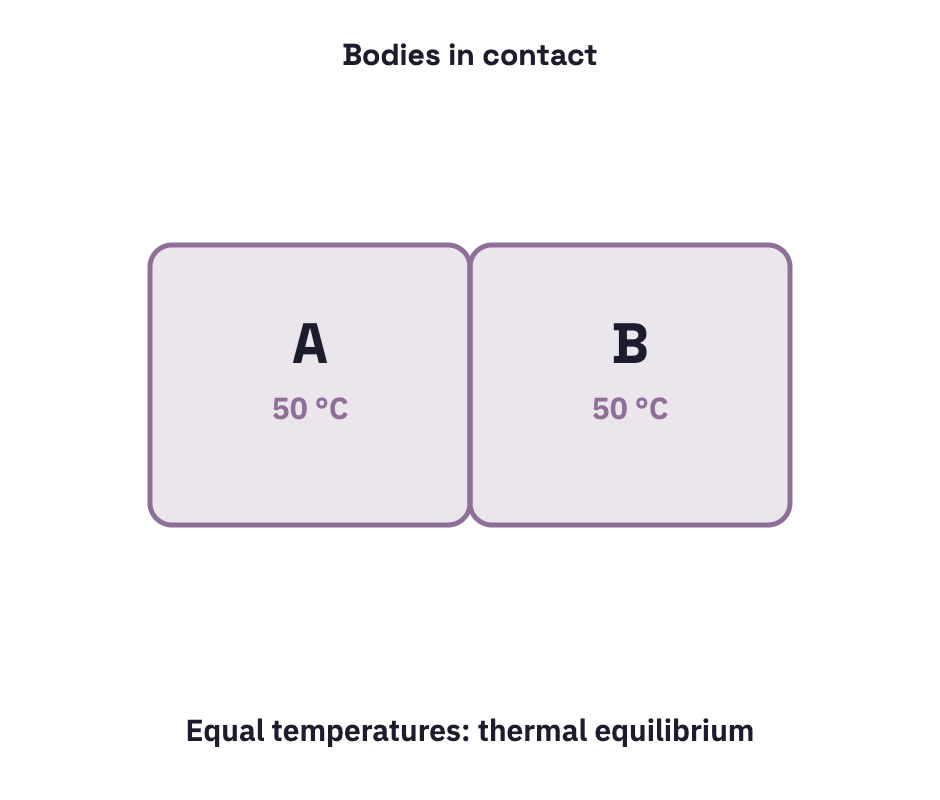
Thermal Equilibrium and the Zeroth Law
Explain thermal equilibrium and the zeroth law, and why it lets us define temperature before the first and second laws.
Thermal equilibrium · Zeroth law of thermodynamics · Temperature and thermometers
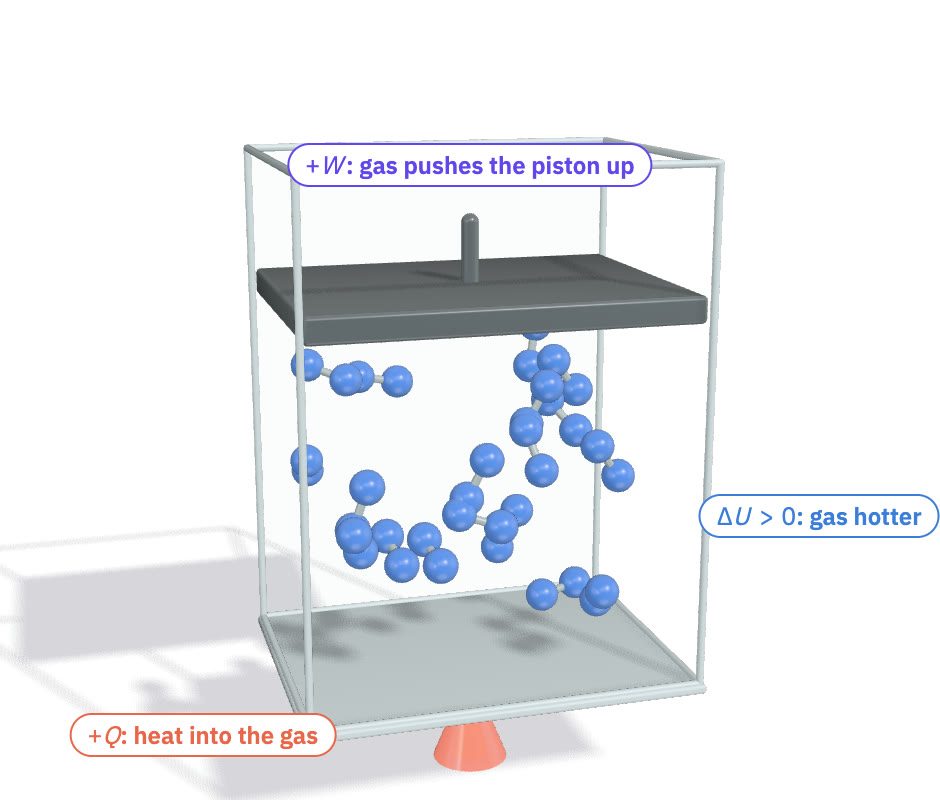
First Law of Thermodynamics
Use ΔQ = ΔU + ΔW with the right signs, and compute heat (Q = nCΔT), work (W = ∫P dV) and internal-energy change (ΔU = (f/2)nRΔT) for a gas.
First law ΔQ = ΔU + ΔW · Molar specific heat · Work done by a gas W = ∫P dV · Change in internal energy
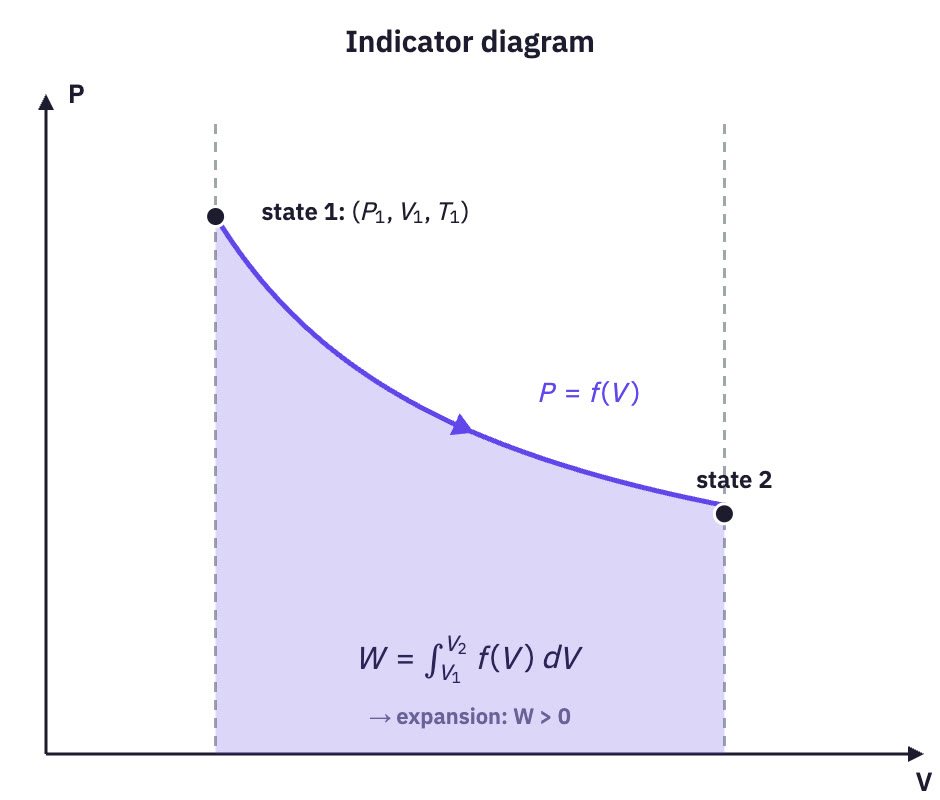
Indicator Diagrams, State Variables and Cycles
Read P–V diagrams: states, paths and work as area; tell state variables from path variables; and find the net work and heat of clockwise and anticlockwise cycles.
Indicator (P–V) diagram · State and path variables · Cyclic processes · Positive and negative cycles
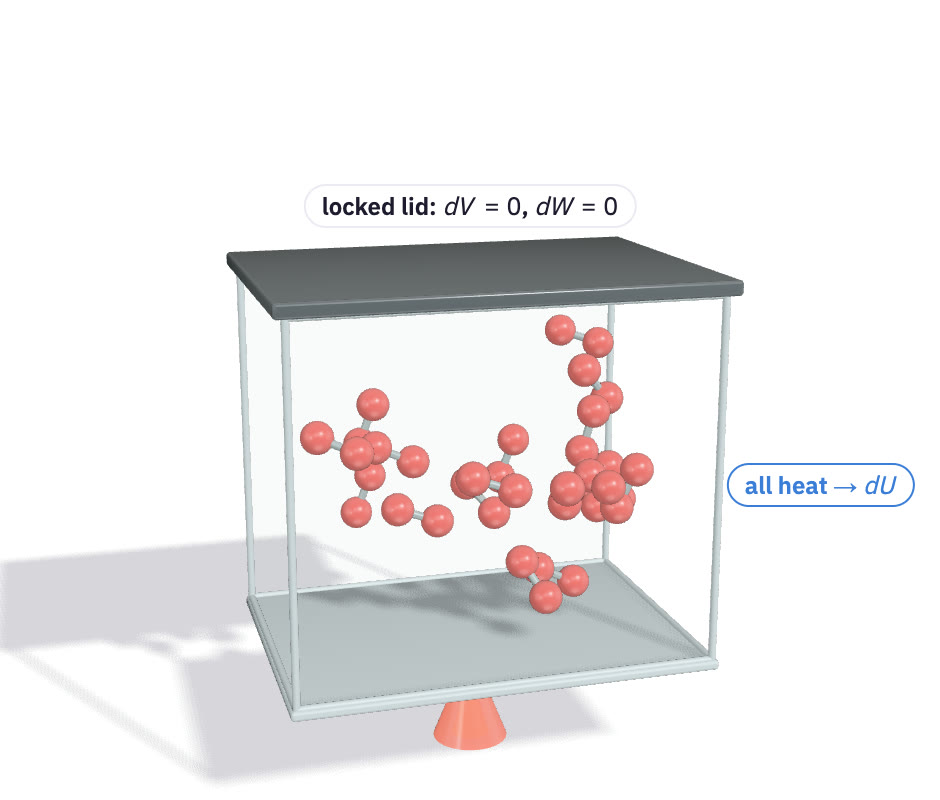
Molar Specific Heats: Cv, Cp and γ
Derive Cv = (f/2)R and Mayer's relation Cp = Cv + R, find γ = (f + 2)/f, and combine gases into an equivalent γ for a mixture.
C_v = (f/2)R · Mayer's relation C_p − C_v = R · Ratio γ = C_p/C_v · γ of a gas mixture
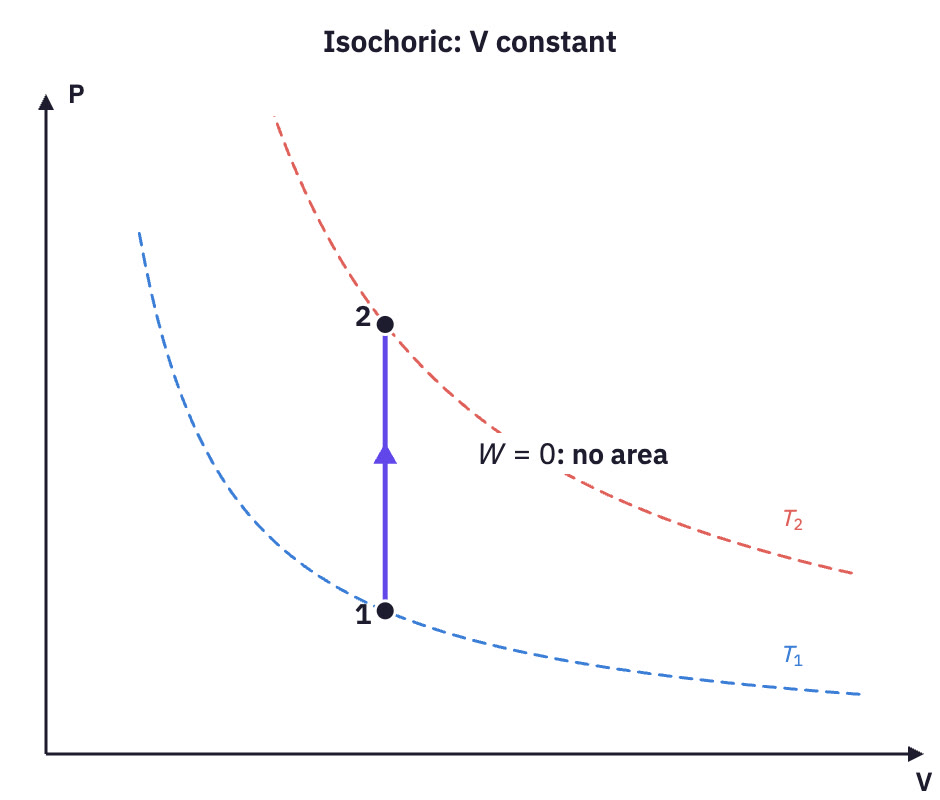
Isochoric, Isobaric and Isothermal Processes
Find Q, W and ΔU for isochoric, isobaric and isothermal processes and draw each on a P–V diagram.
Isochoric process · Isobaric process · Isothermal process W = nRT ln(V₂/V₁)
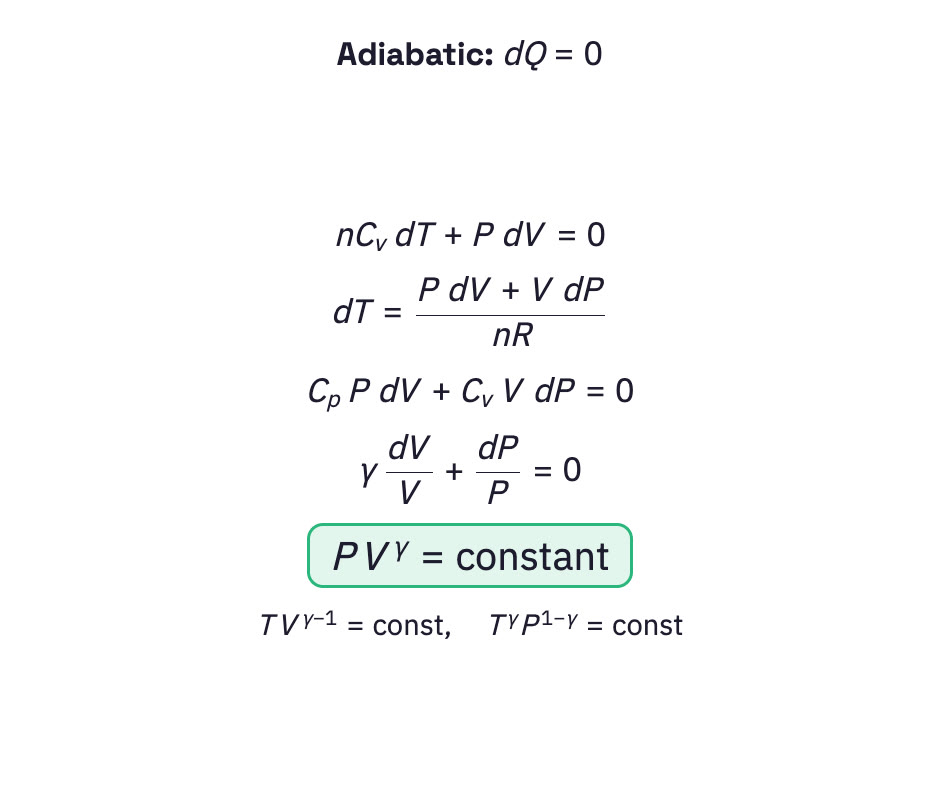
Adiabatic Process
Derive PV^γ = constant, compare the adiabat with the isotherm, and use the adiabatic work and temperature relations, including adiabatic vs isothermal bulk modulus.
Adiabatic process Q = 0 · PV^γ and TV^(γ−1) constant · Adiabat steeper than isotherm · Adiabatic work · Bulk modulus P and γP
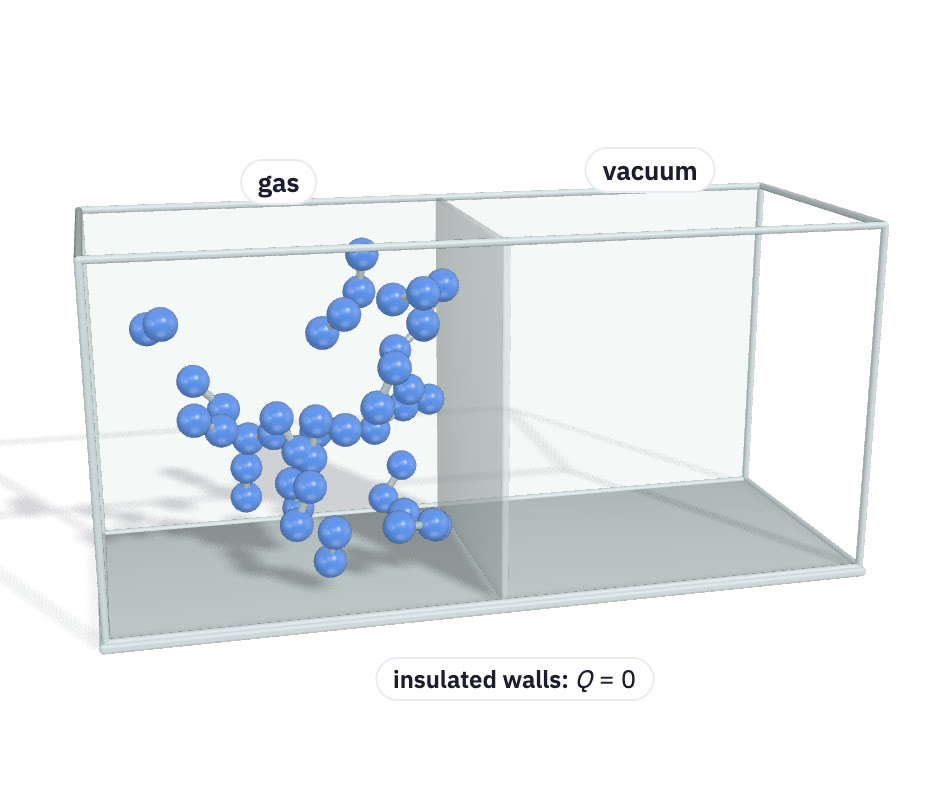
Free Expansion of a Gas
Show that free expansion into a vacuum has Q = 0, W = 0 and ΔU = 0, and use Boyle's law for the end states of an ideal gas.
Free expansion into a vacuum · Q = W = ΔU = 0 · Irreversible process
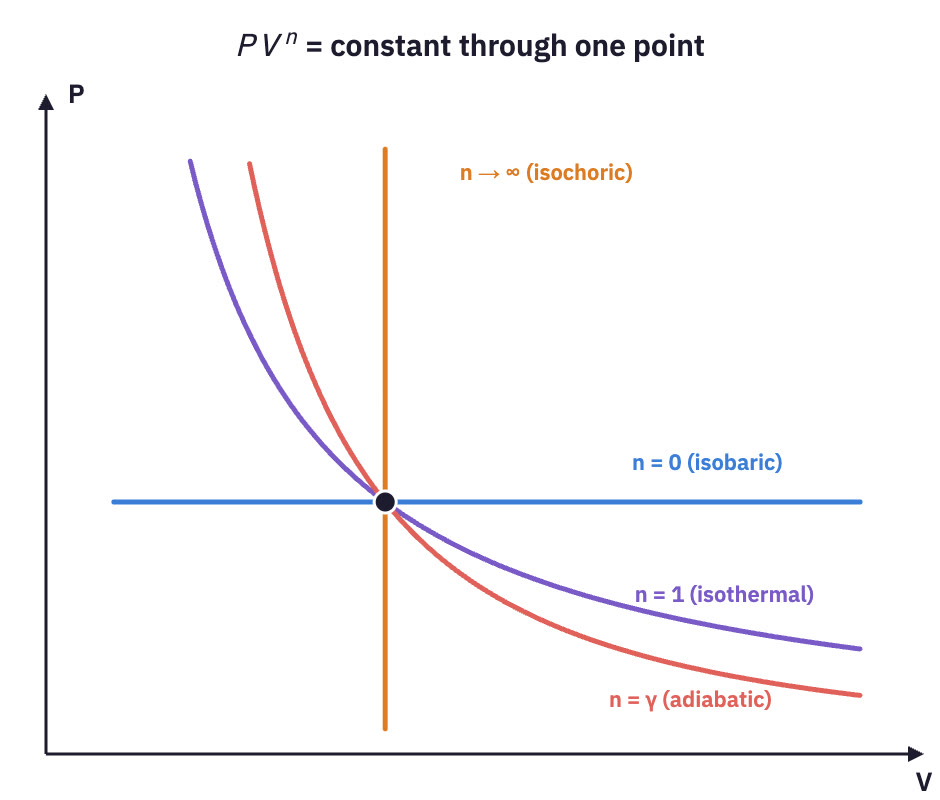
Polytropic Process
Treat every standard process as PVⁿ = constant, find the molar heat capacity C = R/(γ − 1) + R/(1 − n), and compare slopes on a P–V diagram.
Polytropic process PVⁿ = constant · C = R/(γ − 1) + R/(1 − n) · Slope n times the isotherm's
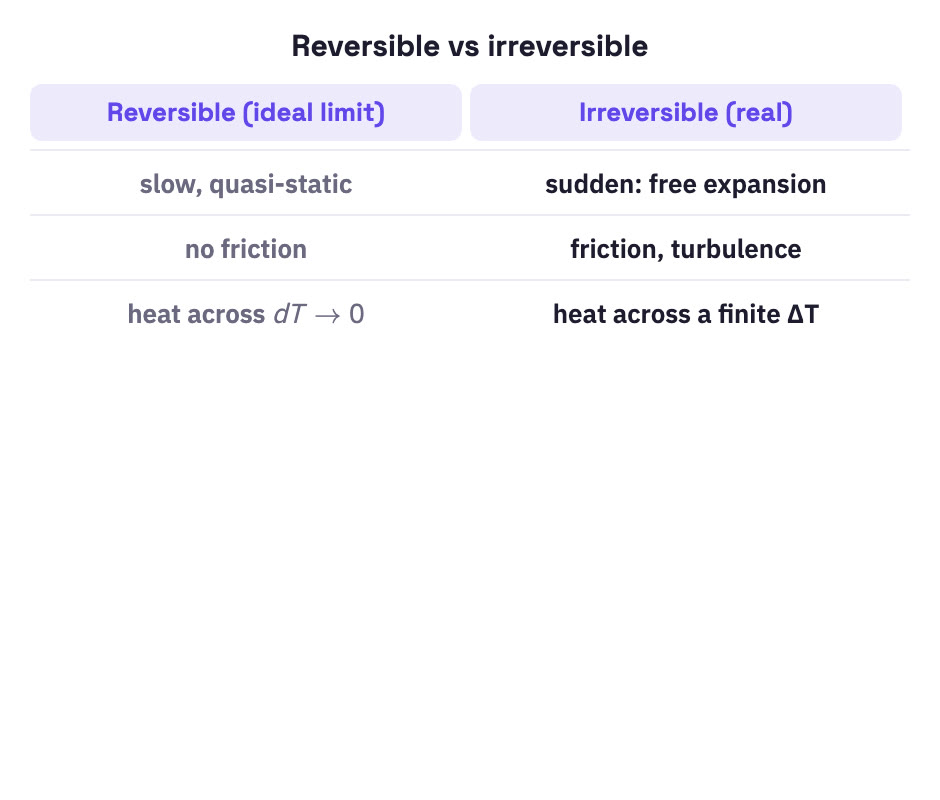
Reversible Processes, Heat Engines and Refrigerators
Explain reversible processes, analyse heat engines (W = Q₁ − Q₂, η = W/Q₁) and refrigerators (COP = Q₂/W).
Reversible and irreversible processes · Heat engine · Thermal efficiency · Refrigerator and COP
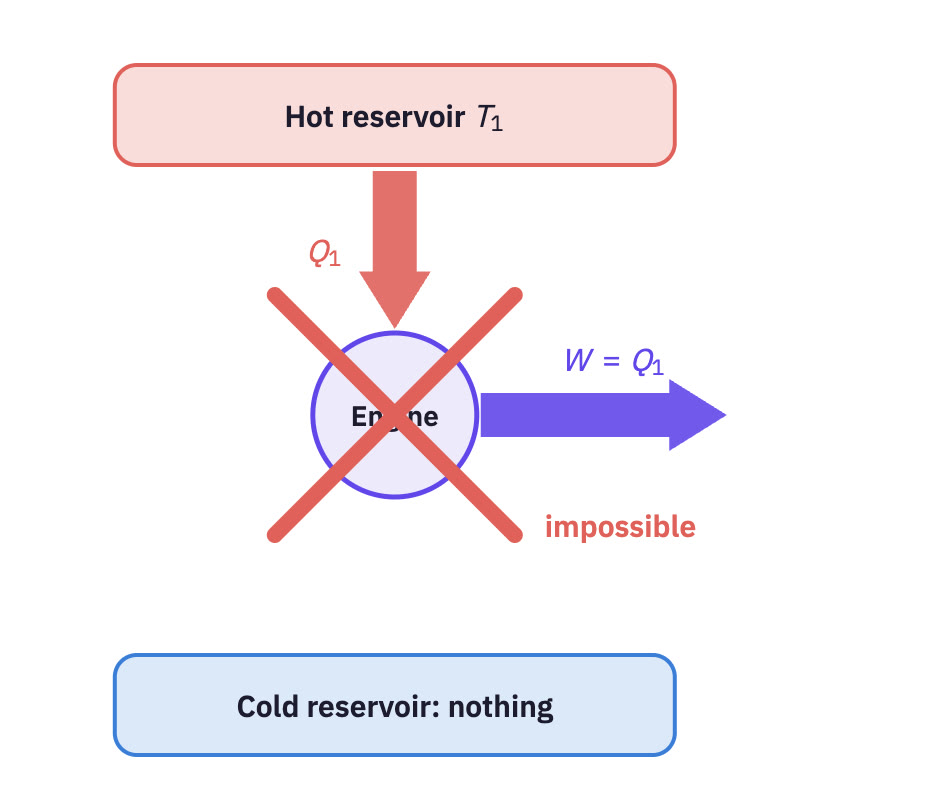
Second Law and the Carnot Cycle
State the Kelvin–Planck and Clausius forms of the second law, and use the Carnot cycle's efficiency η = 1 − T₂/T₁ as the limit for any engine.
Kelvin–Planck statement · Clausius statement · Carnot cycle · Carnot efficiency η = 1 − T₂/T₁